Harbor Street Bakery
Incident response plan
PCI DSS Requirement 12.10.1. Keep a printed copy where the team can reach it without a computer.
1Roles and contacts
The incident lead, or the backup, answers this number at any hour (Req. 12.10.3).
Our merchant IDnot filled in
Our team
- Incident lead, reachable 24/7Dana Reyes (owner)(555) 010-0142
- Backup leadSam Okafor (shift manager)(555) 010-0187
- IT help (person or company)not filled innot filled in
Outside contacts
- Acquirer (merchant bank), risk or fraud teamnot filled innot filled in
- Payment processor supportnot filled innot filled in
- Lawyernot filled innot filled in
- Cyber insurer (if any)not filled innot filled in
- Police or Secret Service field officenot filled innot filled in
- Terminal or POS providernot filled innot filled in
- Web host or store platformnot filled innot filled in
2When this plan starts
Any one of these, suspected or confirmed.
- -Our acquirer, processor or a card brand tells us that cards used with us turned up in fraud.
- -A customer reports fraud on a card they recently used with us.
- -A computer or account used for card payments shows a login, program or change nobody on staff made.
- -Card numbers turn up where they should not be: an email, a spreadsheet, a photo, a note.
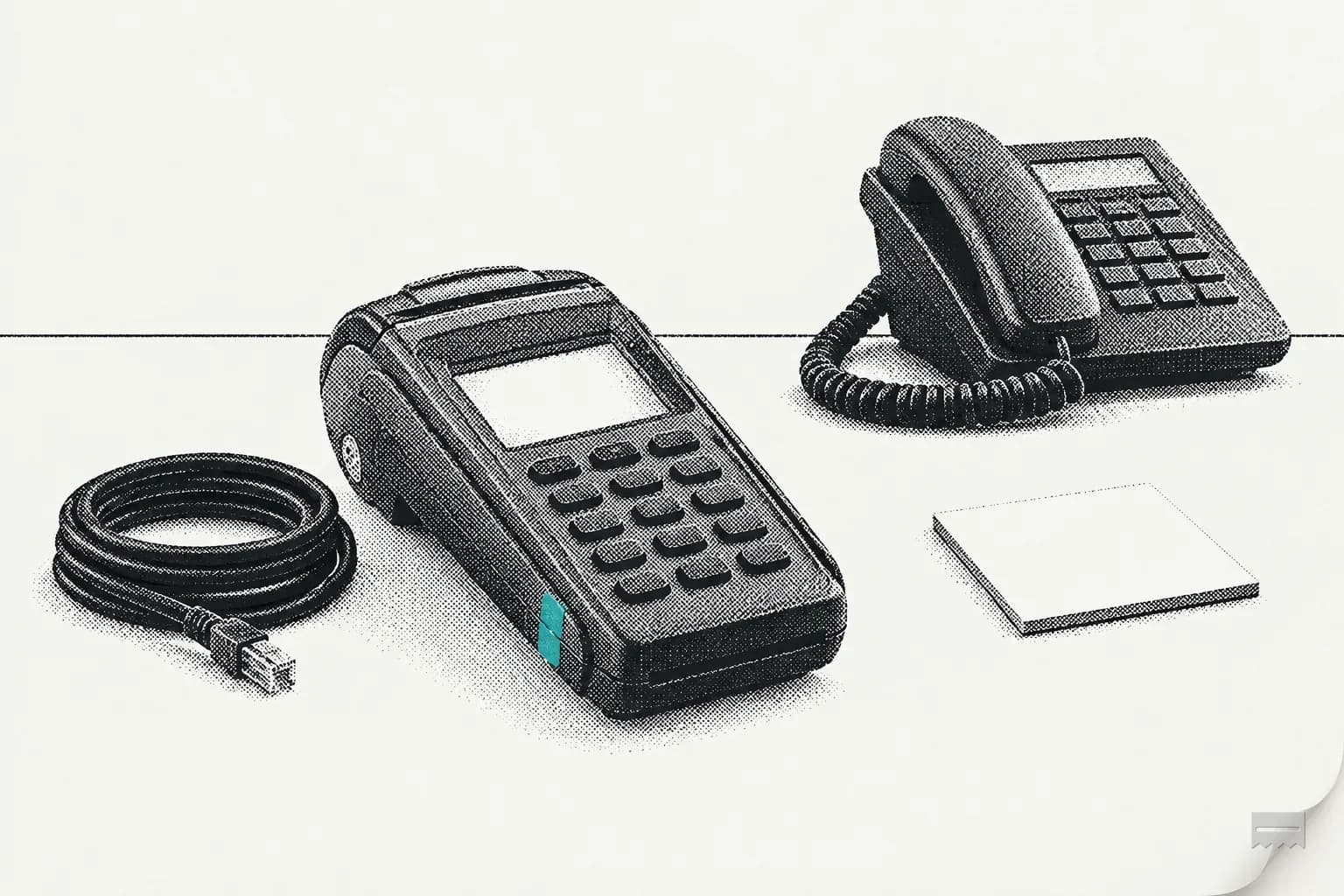
- -A card terminal looks tampered with, has a new overlay or cable, or its serial number is not on our device list.
- -Our payment-page monitoring alerts on a script or header change nobody made.
3First steps: contain without destroying evidence
- 01Stop taking cards on the affected system and switch to the fallback in section 5.
- 02Cut the affected system off from the internet: unplug its network cable or turn off its Wi-Fi. Do not switch it off, restart or reboot it.
- 03Do not log in to it, and do not change its passwords from it. Never log in with an admin account.
- 04List every part that may be affected: computers, terminals, logs, databases, card-reader overlays.
- 05Write down every action: date and time (UTC if you can), who did it and exactly what was done.
- 06Keep all evidence, the devices themselves and their logs. Do not wipe, reinstall or throw anything away.
- 07If card numbers turn up where they should not be: find where they came from, check whether a security code is stored with them, retrieve or securely delete them, and close the gap.
- 08Set a suspect terminal aside untouched, note its serial number, and keep it until the acquirer or processor says what to do with it.
- 09Ask the web host, store platform or cloud provider in writing to keep their logs and system images.
4Who we tell, in this order
- 01Call the incident lead on the 24/7 number in section 1.
- 02Call our acquirer and our payment processor straight away. Ask what they need from us and by when.
- 03Visa: the event must reach Visa within 3 calendar days of the first reasonable suspicion. Ask the acquirer whether they report it or we do.
- 04American Express, if we accept it: tell American Express within 72 hours of finding a data incident.
- 05Mastercard, Discover and other brands: follow what the acquirer tells us.
- 06Our lawyer, about any duty to tell customers or regulators.
- 07Law enforcement: local police, or in the US the Secret Service field office.
- 08Our cyber insurer, if we have one.
- 09The terminal maker or POS reseller, if the cause looks like a flaw in their equipment.
- 10The shopping-cart or store platform vendor, if the cause looks like a flaw in their software.
5Keeping the business running
How we keep taking payments
Cash only at the counter, online orders paused, until the acquirer clears a replacement terminal.
Data backups: where they are, who restores them
Orders and customer list live in the store platform; the bookkeeping file is backed up each night to cloud storage. The owner restores it.
Critical systems this plan covers
- -Office computer used for the processor's online dashboard
- -Router and Wi-Fi
- -Card terminal at the counter (make, model, serial number)
- -Online store and its payment page
6Legal reporting
Who checks which breach-notification laws apply, and how to reach them
not filled in
7Card-brand procedures
From the brands' own documents, read 2026-10-22. Brands update these; check the current version.
Visa
What To Do If Compromised, version 10.0 (effective 25 June 2026). The event reaches Visa within 3 calendar days of the first reasonable suspicion, and an incident report goes to Visa and the acquirer within 3 calendar days after that. If we cannot reach our acquirer, Visa's North America contact is USFraudControl@visa.com; Visa's Risk Operations Center takes emergency calls 24/7 on 1-844-847-2106 (toll free).
American Express
Data Security Operating Policy, section 3 (Data Incidents): notice to American Express within 72 hours of discovery, a thorough investigation, and every affected card number sent to American Express promptly.
Mastercard, Discover, others
Our acquirer will tell us their procedure. Ask for it when we call.
Forensic investigator
A card brand may require a PCI Forensic Investigator (PFI). Once Visa requires one, we sign with a PFI within 5 business days. The PFI cannot be a firm that worked for us in the past 3 years, for example as our QSA or consultant. The PCI Security Standards Council lists PFIs on its website.
8Yearly test and lessons learned
Reviewed and tested at least once every 12 months, covering every section above (Req. 12.10.2); updated with what each test or incident taught (Req. 12.10.6).
Last tested on
not filled in
Tested by
not filled in
Next test due
not filled in
What the last test changed
- -Phone numbers that changed since the last test
- -Steps that were unclear or out of order